
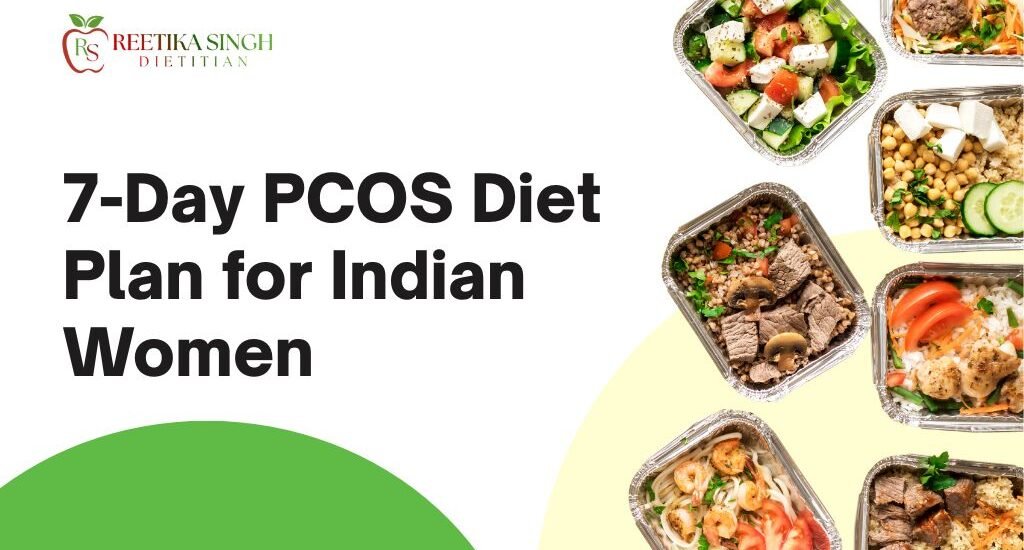
Polycystic Ovary Syndrome (PCOS) affects nearly 1 in 5 Indian women, making it one of the most common hormonal disorders among women of reproductive age. While there’s no single “cure” for PCOS, the right diet can make a real difference helping manage insulin resistance, balance hormones, reduce inflammation, and support weight management.
This 7-day PCOS diet plan is designed around everyday Indian foods, so you don’t have to give up your favorite flavors to eat healthier. Below, you’ll find the science-backed principles behind a PCOS friendly diet, followed by a full week’s meal plan you can download and follow.
Understanding PCOS and Diet
PCOS is closely linked to insulin resistance in most women. When insulin levels stay high, it can worsen androgen (male hormone) production, leading to symptoms like irregular periods, acne, excess hair growth, and weight gain especially around the belly.
A PCOS friendly diet focuses on:
- Low glycemic index (GI) foods – to prevent insulin spikes
- High fiber intake – to slow sugar absorption and support gut health
- Adequate protein – to stabilize blood sugar and preserve muscle mass
- Healthy fats – to support hormone production
- Anti-inflammatory foods – to reduce the chronic low grade inflammation common in PCOS
- Limiting refined carbs, sugar, and processed foods
Key Principles Before You Start
- Swap refined grains for whole grains – Choose brown rice, whole wheat, millets (bajra, jowar, ragi), and oats over white rice and maida.
- Add protein to every meal – Dal, paneer, eggs, chicken, fish, and sprouts help balance blood sugar.
- Don’t skip meals – Long gaps can cause blood sugar crashes and cravings.
- Include healthy fats – Nuts, seeds, ghee (in moderation), and cold-pressed oils support hormone health.
- Stay hydrated – Aim for 2.5-3 litres of water daily.
- Limit sugar and fried foods – These worsen insulin resistance.
- Move your body daily – Even a 30 minute walk supports insulin sensitivity.
Note: This plan is a general wellness guide, not a substitute for personalized medical or nutritional advice. Please consult a doctor or registered dietitian before making significant changes to your diet, especially if you have other health conditions.
The 7-Day PCOS Diet Plan
Day 1
- Early Morning: Soaked fenugreek (methi) water
- Breakfast: Vegetable moong dal chilla + mint chutney
- Mid-Morning: A small bowl of papaya
- Lunch: Brown rice, palak dal, cucumber-tomato salad
- Evening Snack: Roasted chana with a cup of green tea
- Dinner: Grilled paneer tikka with sauteed vegetables
- Bedtime: A glass of turmeric milk (haldi doodh)
Day 2
- Early Morning: Warm lemon water
- Breakfast: Vegetable oats upma
- Mid-Morning: A handful of soaked almonds and walnuts
- Lunch: Bajra roti, rajma curry, onion-tomato salad
- Evening Snack: Sprouts chaat
- Dinner: Grilled fish or tofu with a side of steamed broccoli and carrots
- Bedtime: Chamomile tea
Day 3
- Early Morning: Soaked chia seed water
- Breakfast: Besan (chickpea flour) cheela with mint chutney
- Mid-Morning: One apple or guava
- Lunch: Quinoa or brown rice pulao with mixed vegetables and curd
- Evening Snack: Roasted makhana (fox nuts)
- Dinner: Egg bhurji or tofu bhurji with multigrain roti
- Bedtime: Warm milk with a pinch of cinnamon
Day 4
- Early Morning: Cucumber-mint infused water
- Breakfast: Ragi dosa with sambar
- Mid-Morning: A small bowl of pomegranate
- Lunch: Whole wheat roti, lauki (bottle gourd) sabzi, moong dal
- Evening Snack: Vegetable soup
- Dinner: Grilled chicken or chickpea salad with olive oil dressing
- Bedtime: Herbal tea
Day 5
- Early Morning: Warm water with soaked fennel seeds
- Breakfast: Vegetable and paneer stuffed paratha (cooked in minimal ghee) with curd
- Mid-Morning: A handful of walnuts
- Lunch: Brown rice, chana dal, bhindi (okra) sabzi
- Evening Snack: Roasted peanuts and a cup of black coffee (optional, limit caffeine)
- Dinner: Moong dal khichdi with vegetables and a side salad
- Bedtime: Turmeric milk
Day 6
- Early Morning: Lemon and honey warm water
- Breakfast: Vegetable dalia (broken wheat porridge)
- Mid-Morning: One orange or a few berries
- Lunch: Jowar roti, mixed vegetable curry, curd
- Evening Snack: Roasted chana or a handful of pumpkin seeds
- Dinner: Grilled paneer or soya chunk curry with sautéed greens
- Bedtime: Chamomile or ashwagandha tea
Day 7
- Early Morning: Warm methi water
- Breakfast: Moong dal and vegetable dosa with coconut chutney
- Mid-Morning: A small bowl of papaya or melon
- Lunch: Brown rice, dal makhani (light on cream/butter), salad
- Evening Snack: Vegetable soup or roasted makhana
- Dinner: Grilled fish or tofu stir fry with vegetables
- Bedtime: Warm turmeric milk
Foods to Include Regularly
- Millets: bajra, jowar, ragi
- Leafy greens: spinach, methi, amaranth
- Legumes: moong dal, chana, rajma, sprouts
- Lean proteins: eggs, fish, chicken, paneer, tofu
- Nuts and seeds: almonds, walnuts, flaxseed, pumpkin seeds
- Healthy fats: olive oil, mustard oil, ghee (in moderation)
- Low GI fruits: guava, papaya, berries, apples, pears
Foods to Limit or Avoid
- White rice, maida, and refined flour products
- Sugary drinks, packaged juices, and sweets
- Deep fried snacks (samosa, pakora, etc.)
- Processed and packaged foods high in trans fats
- Excess caffeine
- Full fat dairy in large quantities (moderate curd/paneer is fine for most)
Lifestyle Tips to Support Your Diet
- Sleep: Aim for 7-8 hours a night poor sleep worsens insulin resistance.
- Exercise: Combine 30 minutes of walking or cardio with 2 days of strength training weekly.
- Stress management: Try yoga, meditation, or deep breathing cortisol spikes can worsen PCOS symptoms.
- Consistency over perfection: Small, sustainable changes work better long term than extreme restriction.
Managing PCOS through diet is about building sustainable habits, not chasing quick fixes or extreme restriction. This 7-day plan is a starting template feel free to swap meals based on your regional preferences and what’s available to you, as long as you stick to the core principles of low-GI, high-fiber, protein rich eating.
Disclaimer: This content is for general informational purposes only and is not medical advice. PCOS symptoms and needs vary from person to person. Please consult a gynecologist, endocrinologist, or registered dietitian to create a plan tailored to your specific health profile.